How to Bring Baking Into Your Homeschool: Easy Ideas for Learning in the Kitchen
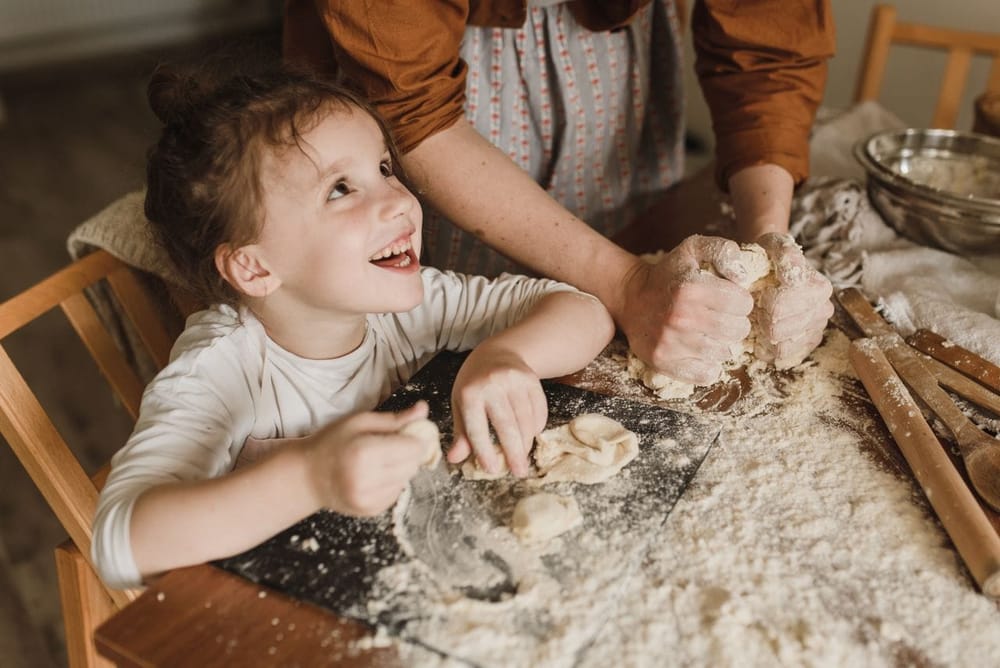
Have you ever considered how much your children could learn while making a batch of muffins, kneading bread, or decorating cookies? Baking offers wonderful opportunities to bring learning to life. It combines practical skills, hands-on exploration, creativity, and family connection in a way that feels natural and enjoyable.
When children bake, they aren’t just following a recipe. They’re practicing math, strengthening reading skills, exploring science, developing independence, and learning how to work through challenges.
And the best part? You don’t need an elaborate curriculum, expensive supplies, or a perfectly organized kitchen to get started.
Whether you’re a longtime homeschool mom or just beginning your homeschooling journey, incorporating baking into your routine can be a simple way to enrich your children’s learning while making room for a little extra magic in your days.
Let’s explore the benefits of baking in your homeschool, practical activities to try, and simple ways to make baking a meaningful part of your family’s learning experience.
Why Baking Belongs in Your Homeschool
One of the beautiful things about homeschooling is the opportunity to connect education with everyday life. Learning doesn’t have to happen exclusively through textbooks, worksheets, or formal lessons. Some of the most meaningful learning opportunities can be found in ordinary activities.
Baking is a wonderful example.
A recipe can become a reading lesson. Measuring ingredients provides opportunities to practice math. Watching bread dough rise introduces scientific concepts, while working through the steps of a recipe encourages patience, problem-solving, and attention to detail.
Baking also helps children develop practical skills they’ll use throughout their lives.
Beyond the educational benefits, baking offers opportunities to slow down, work together, and create something to share. It can become a family tradition, a seasonal activity, or simply an enjoyable way to add variety to your homeschool week.
You don’t need to turn every baking session into a formal lesson. Instead, look for opportunities to connect what you’re already doing in the kitchen with what your children are learning.
Here are some simple ways to get started.
Turn Your Kitchen Into a Math Classroom
If your children have ever wondered when they’ll use math in real life, baking offers a delicious answer! Recipes provide natural opportunities to practice counting, measuring, fractions, multiplication, division, and problem-solving.
-Practice measuring and counting-Younger children can count spoonfuls of ingredients, compare measuring cups, or help measure flour and sugar. These activities introduce quantities and number relationships through hands-on experience.
-Explore fractions-Invite your children to compare one-half cup with one-quarter cup or figure out how to measure one cup using a half-cup measure.
Ask questions such as, “If we need two cups of flour and our measuring cup holds half a cup, how many scoops will we need?”
-Double or halve a recipe-Older children can calculate the ingredients needed to double a cookie recipe or make half a batch. This provides practical experience with multiplication, division, and proportional reasoning.
-Practice time and temperature-Read the recipe’s preparation and baking times together. Children can estimate how long a project will take, calculate elapsed time, and learn why oven temperature matters.
These activities don’t need to become formal math assignments. Simply invite children to participate in the calculations that naturally arise as you bake.
Strengthen Reading and Writing Skills
Baking is also an engaging way to practice literacy skills without opening a workbook.
-Follow a recipe-Recipes require children to read instructions, recognize ingredient names, follow steps in order, and pay attention to details.
Younger children might follow picture-based instructions or identify familiar words. Older children can read a complete recipe and take responsibility for working through its steps with appropriate supervision.
-Build vocabulary-Introduce words such as whisk, fold, sift, knead, and cream as you bake. Encourage children to explain what each word means and demonstrate the action when appropriate.
You could even create a family baking vocabulary list to revisit during future projects.
-Practice sequencing-Ask children to explain what happens first, next, and last when making a recipe. After baking, they can retell the process, draw pictures of the steps, or write a simple summary.
-Create a family recipe book-Older children can record favorite recipes, write instructions, illustrate recipe cards, or document adjustments they’ve made.
Over time, a family recipe book can become a useful writing project and a collection of recipes worth keeping.
Explore Science Through Baking
The kitchen is full of opportunities for scientific observation.
Why does bread dough rise? What happens when butter melts? Why do cookies change shape in the oven? These everyday questions can inspire meaningful science discussions and experiments.
-Observe yeast at work-When making yeast bread, children can observe how dough changes over time. Explain how yeast produces carbon dioxide, which helps the dough rise. Invite children to predict what might happen before baking and describe their observations afterward.
-Investigate baking soda and baking powder-These ingredients help baked goods rise by producing gas through chemical reactions. Baking soda typically reacts with acidic ingredients, while baking powder contains components that react when moistened and heated.
Compare two small batches of an appropriate recipe, changing one variable at a time when practical. Observe differences in height, texture, and appearance.
-Explore the effects of heat-Compare cookie dough before and after baking. Discuss changes in texture, color, and shape, and explore why oven temperature and baking time affect the finished product.
-Practice making predictions-Before beginning, ask questions such as:
What do you think will happen if we allow the dough to rise longer?
How might changing the amount of liquid affect the dough?
What differences might we notice if we change one ingredient?
Encourage children to record observations and compare results. An unexpected outcome can be just as valuable for learning as a successful recipe.
Build Practical Life Skills and Independence
Baking provides opportunities for children to develop skills that extend far beyond the kitchen. As they gain experience, children can learn to gather supplies, measure ingredients, follow instructions, organize their workspace, and clean up afterward.
They also have opportunities to practice patience, persistence, cooperation, and problem-solving. A recipe doesn’t always turn out exactly as expected. Perhaps an ingredient was overlooked, the dough is too sticky, or the finished cookies need a little more time. With guidance, these moments can encourage children to identify a problem and consider possible solutions.
Age-Appropriate Baking Skills
Every child develops at their own pace, and previous experience matters. Use these suggestions as flexible starting points rather than strict expectations.
Possible baking activity ideas:
Ages 2–4
Stir pre-measured ingredients, count items, pour with help, and sprinkle toppings
Ages 5–7
Help measure ingredients, follow simple instructions, identify kitchen tools, and crack eggs with guidance
Ages 8–10
Follow familiar recipes with supervision, practice fractions, gather ingredients, and complete more steps independently
Ages 11–13
Scale recipes, plan ingredient lists, compare costs, and troubleshoot baking problems
Age 14+
Plan baking projects, budget for ingredients, explore advanced techniques, and manage appropriate recipes with increasing independence
These age ranges are only general guidelines. Adapt activities to your child’s confidence, abilities, interests, and experience.
Kitchen safety remains essential at every age. Children need appropriate instruction and supervision when working with ovens, sharp tools, mixers, and other potentially hazardous equipment.
The goal is to help children develop confidence and independence one skill at a time.
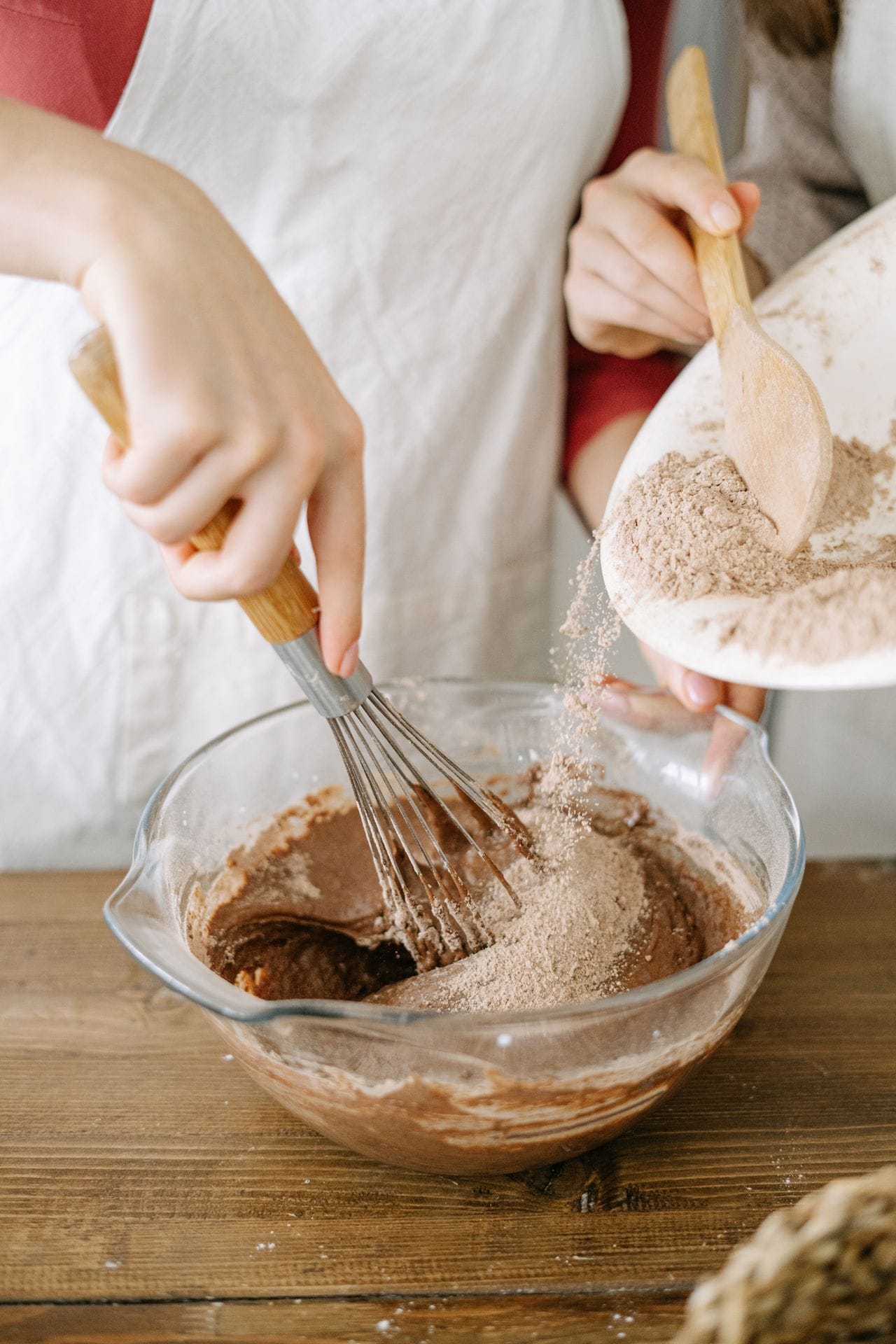
Connect Baking With Other Homeschool Subjects
One of the easiest ways to incorporate baking into your homeschool is to connect it with subjects you’re already exploring.
You don’t need to create a separate curriculum. Look for natural opportunities to extend your children’s learning through the activities you’re already doing.
Math: Measure ingredients, compare quantities, practice fractions, double recipes, and calculate preparation time.
Reading and writing: Follow recipes, learn vocabulary, sequence instructions, write recipe cards, and record observations.
Science: Explore yeast, leavening agents, ingredient properties, and the effects of changing ingredients or baking temperatures.
History: Investigate how baking traditions have changed over time, explore historical recipes, and learn about the ingredients and tools used in different periods.
Geography and culture: Explore where ingredients such as cocoa, cinnamon, vanilla, and wheat originate. Learn about traditional baked foods from different regions and the cultural traditions associated with them.
Art: Decorate cookies, design packaging for homemade gifts, sketch baked goods, or create illustrated recipe cards.
Practical life skills: Practice organization, kitchen safety, planning, following instructions, and cleaning up.
Choose the connections that fit your family’s interests and current studies. You can explore one subject or combine several in a single baking activity.
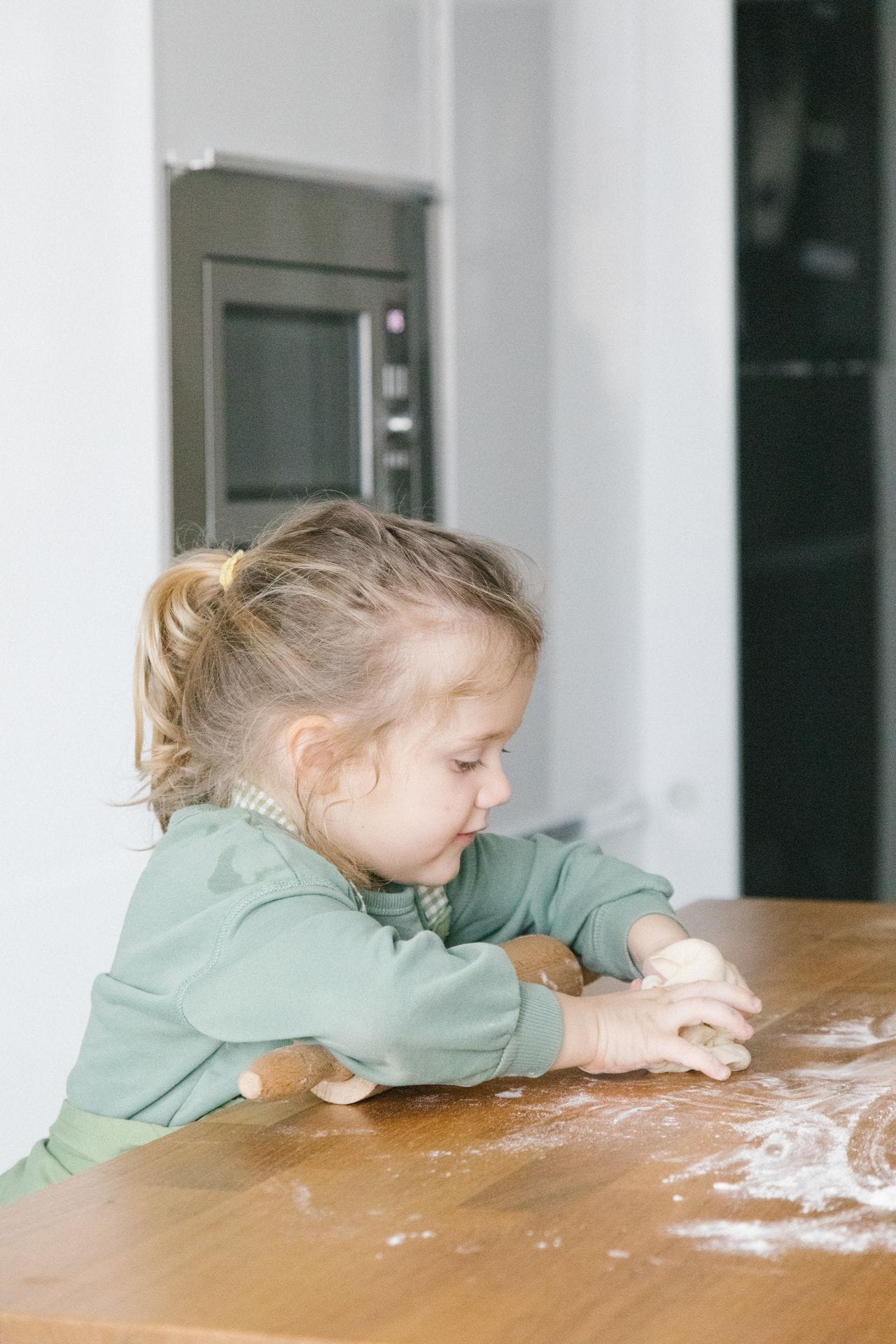
Create a Simple Homeschool Baking Routine
Knowing that baking can be educational is one thing. Finding time to make it happen is another! When homeschool schedules are full, baking can easily become an activity that gets postponed week after week. A little planning can help you move from good intentions to a manageable routine.
Start with one baking day a month-You don’t need to begin with weekly baking. Choose one day each month when your schedule allows a little extra time. Once that feels manageable, you can decide whether to bake more frequently.
Choose simple recipes-Start with familiar favorites or beginner-friendly recipes, such as muffins, quick breads, simple cookies, or biscuits. Save more complicated projects for days when you have additional time and energy.
Check your ingredients ahead of time-Review the recipe and make sure you have the necessary ingredients and equipment. A quick pantry check can prevent last-minute surprises.
Give everyone a role-Assign age-appropriate responsibilities, such as gathering mixing bowls, measuring ingredients, reading instructions, or helping clean the workspace. Even small contributions help children participate.
Keep a running list of baking ideas-Organize ideas by season, holiday, difficulty, or educational connection. When baking day arrives, you’ll already have a few options to choose from. Leave room for flexibility. Some weeks are simply too busy. Choose an easier recipe, try a no-bake activity, or postpone your plans when necessary. The goal is to make baking a joyful part of your homeschool, not another source of pressure.
Celebrate the Seasons With Baking
Seasonal baking is a lovely way to bring anticipation and variety into your homeschool year. It offers natural connections to holidays, seasonal ingredients, family traditions, and cultural celebrations. It can also give children something special to look forward to as the seasons change.
Here are a few ideas to inspire your family’s baking calendar:
Autumn: Pumpkin muffins, apple bread, or cinnamon treats.
Winter: Gingerbread cookies, homemade bread, or festive holiday biscuits.
Spring: Lemon muffins, fruit-filled pastries, or treats decorated with spring themes.
Summer: Berry muffins, simple fruit desserts, or homemade treats for family gatherings.
You can also explore traditional recipes associated with holidays or investigate how ingredients change with the seasons. Seasonal baking doesn’t need to be elaborate. Choose traditions that matter to your family and recipes that fit your time, budget, and abilities.
Over time, certain treats may become part of your family’s own annual traditions.
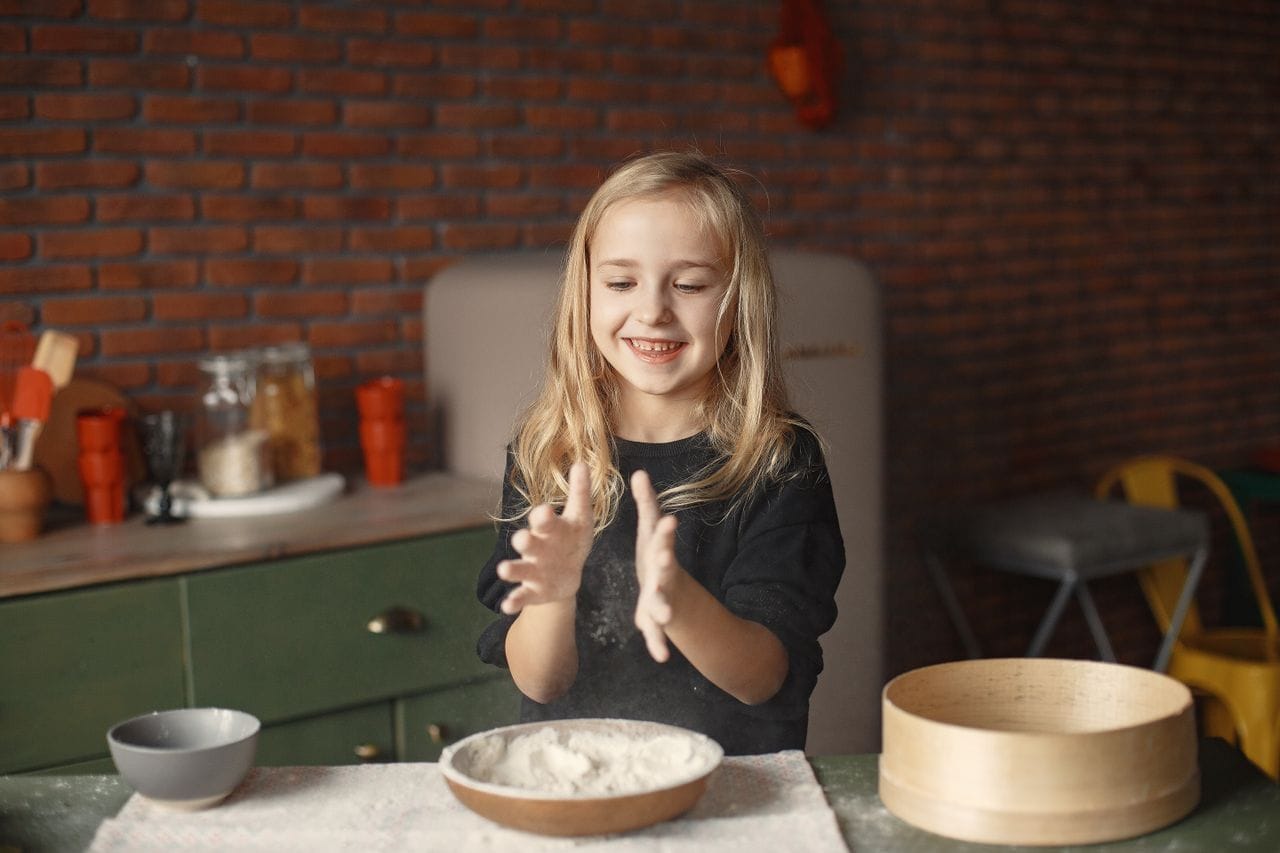
Make Baking Manageable for Your Family
Baking with children isn’t always picture-perfect. There may be spills, forgotten ingredients, uneven cookies, and moments when everyone needs a break.
That’s part of learning, too. You don’t need a spotless kitchen, expensive equipment, or specialty ingredients to begin. A few simple strategies can make baking more enjoyable for everyone.
Some tips to follow:
-Choose a realistic amount of time-A simple recipe on a relaxed afternoon may be more enjoyable than an elaborate project squeezed between lessons and appointments.
-Prepare ahead when helpful- Read the recipe, gather supplies, and measure ingredients in advance if doing so makes participation easier for your children.
-Adapt the activity-One child might enjoy measuring while another prefers decorating or observing how dough changes.
-Use what you already have-Start with familiar recipes and basic equipment instead of purchasing a collection of new supplies.
-Keep safety in mind-Wash hands, manage food allergies carefully, maintain a clean workspace, and establish clear rules around hot equipment and sharp tools.
Let go of perfection. Homemade treats don’t need to look professionally made. The learning, participation, and time together are what matter.
Most importantly, remember that not every baking experience needs an academic objective. You can explore fractions and discuss the science of yeast, but you can also bake simply because it’s enjoyable.
There is room for both.
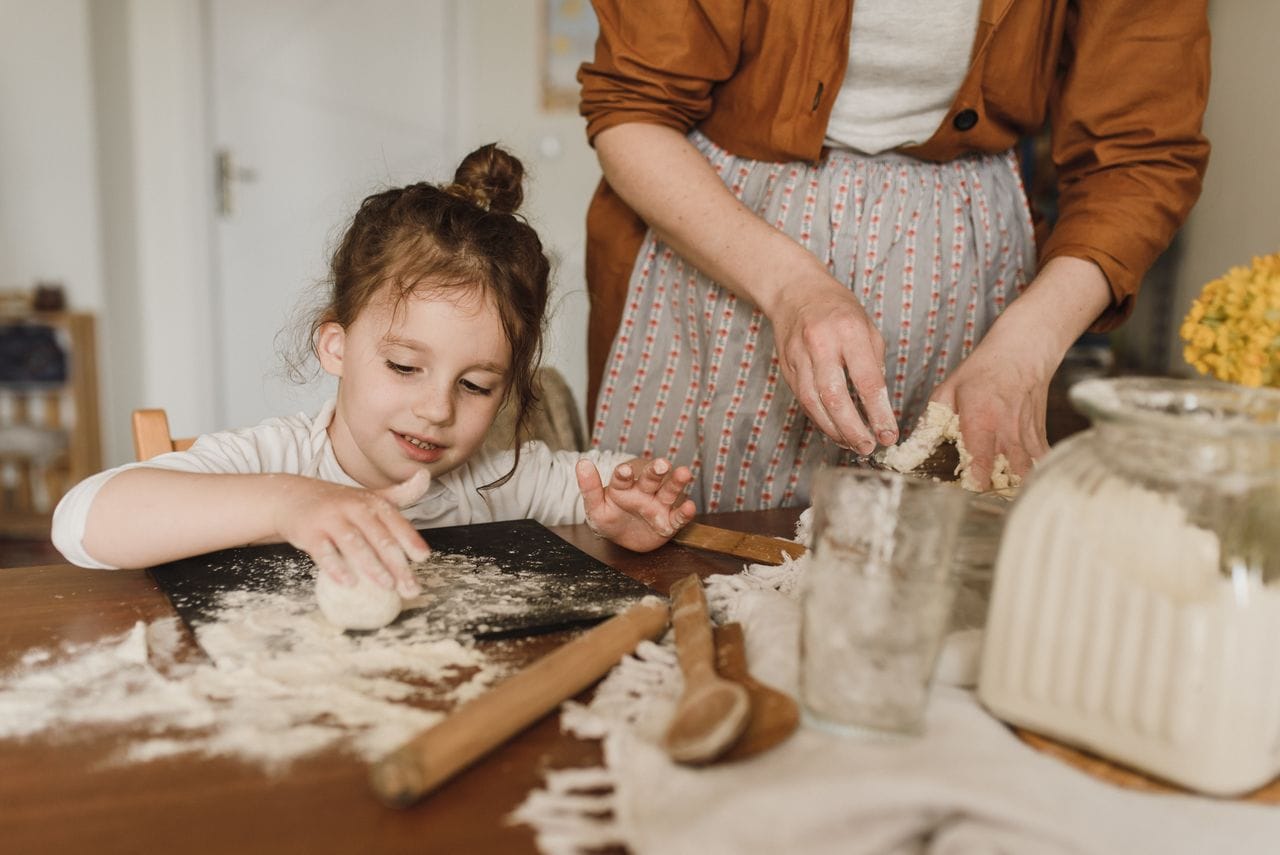
Get Started With Homeschool Baking
Bringing baking into your homeschool doesn’t require a complicated plan. Start with one recipe your family enjoys and invite your children to participate in ways that match their abilities.
As you bake, look for natural opportunities to practice math, strengthen reading skills, explore science, and develop practical independence. Let your children’s curiosity guide some of the conversations, and give yourselves permission to enjoy the process.
If you’d like to make baking a more consistent part of your homeschool, consider choosing one baking activity each month and keeping a simple list of recipes you’d like to try.
Small steps can lead to meaningful traditions. Imagine the skills children can develop as they learn to measure ingredients, follow instructions, solve problems, and eventually prepare favorite recipes with greater independence. Imagine the opportunities for creativity, collaboration, and connection along the way.
These experiences don’t need to be elaborate to be worthwhile.
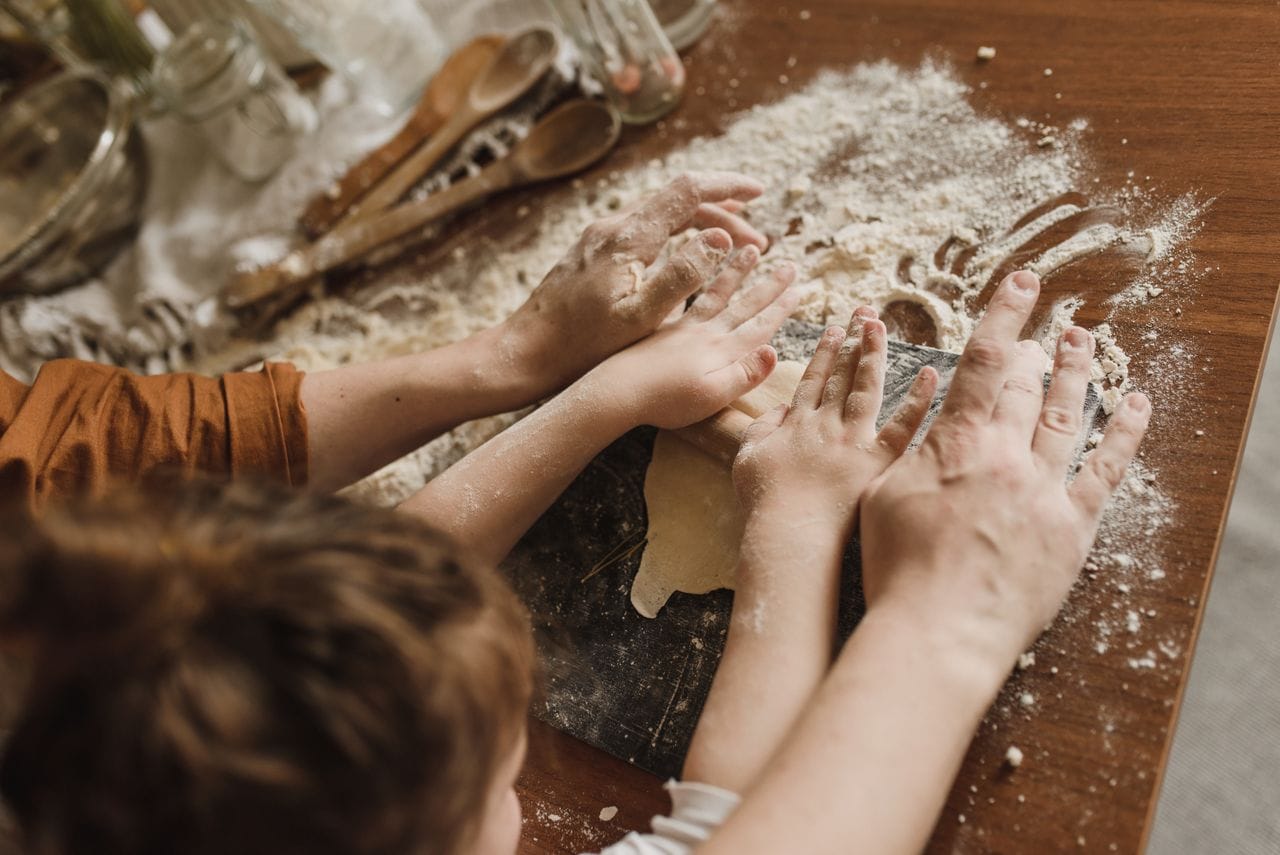
Ready to Grow Your Little Bakers?
At The Lively Bean, we believe that meaningful homeschool learning can happen in the everyday moments we share with our children. Baking offers a simple way to combine practical skills, hands-on learning, and family connection—and it doesn’t have to be complicated.
Start with one recipe. Invite your children into the process. Celebrate their growing skills and enjoy the memories you make along the way.
And keep an eye out for our upcoming Growing Bakers: An Age-by-Age Guide to Baking Skills for Kids, a printable resource designed to help families explore age-appropriate ways to build confidence and independence in the kitchen.
Here’s to more learning, more connection, and a little extra magic in your homeschool—one delicious baking adventure at a time!
Happy baking!